Blog
Digital Marketing vs Traditional Marketing: Which One Wins in 2025?
Blog
Digital Marketing vs Traditional Marketing: Which One Wins in 2025?
In this digital-first world, businesses often find it difficult to decide whether to invest in traditional marketing, digital marketing, or a combination of the two. Although this argument has been going on…
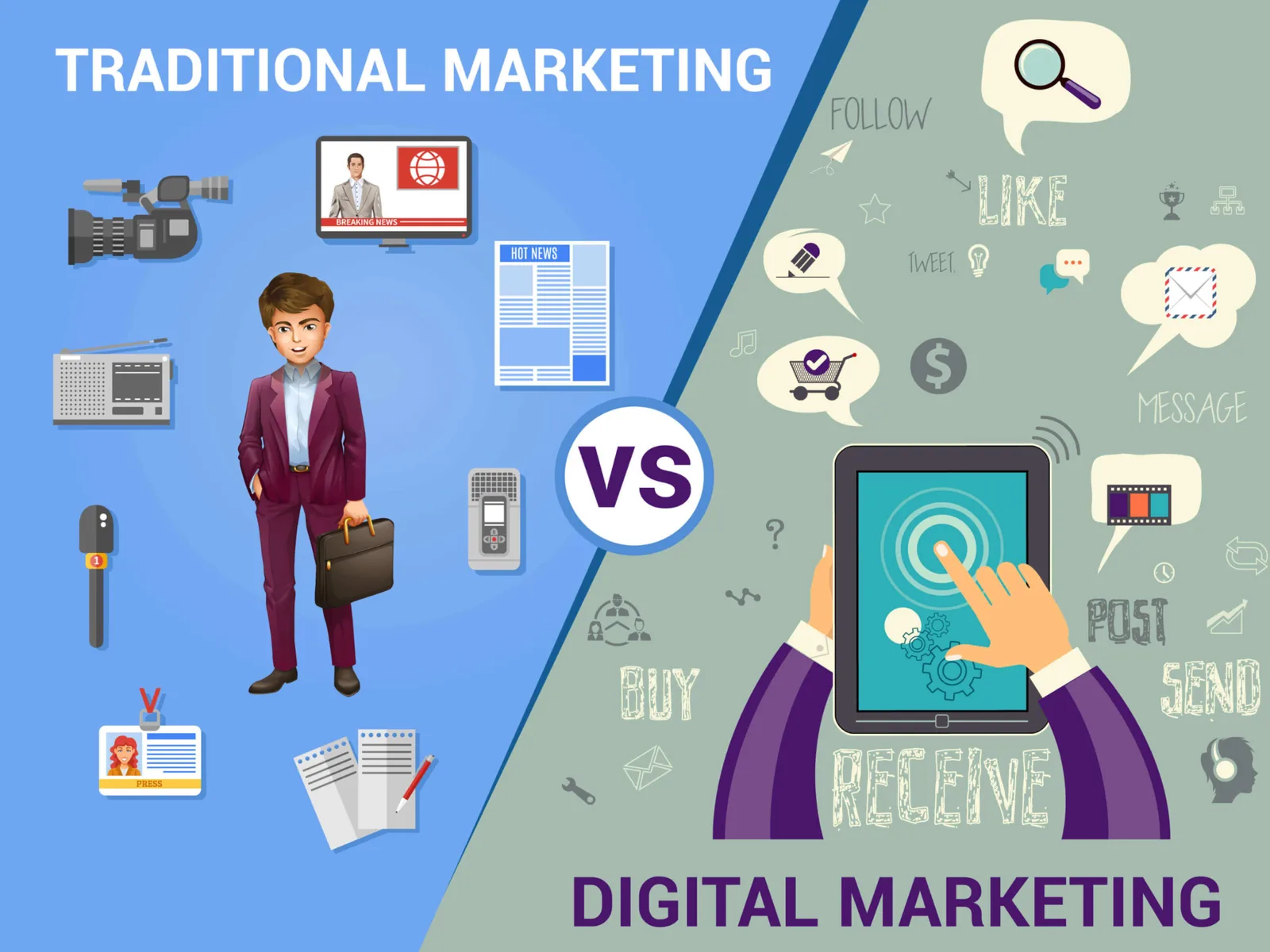
In this digital-first world, businesses often find it difficult to decide whether to invest in traditional marketing, digital marketing, or a combination of the two. Although this argument has been going on for more than ten years, the boundaries have never been more clearly defined due to changes in media consumption, consumer behaviour, and technology breakthrough.
The modern era is dominated by data management and well developed information communication systems. It is known as the digital era and in this era digital marketing is much more impactful force than the traditional media. In our digital era marketing force is propelled by data, the media is easily accessible, the ad preferences are personalized by the users. Though traditional marketers believe television, print,radio, and billboards still have a place. However marketers have to be smart to understand the pros and cons of both of these medias rather than seeing them as rivals.
In this blog, we’ll dive deep into the evolving landscape of marketing, evaluate the effectiveness of digital vs. traditional channels in 2025, and ultimately answer the question: Which one truly wins in today’s world of advertising and branding?
The Evolution of Marketing: From Broadcast to Interactive
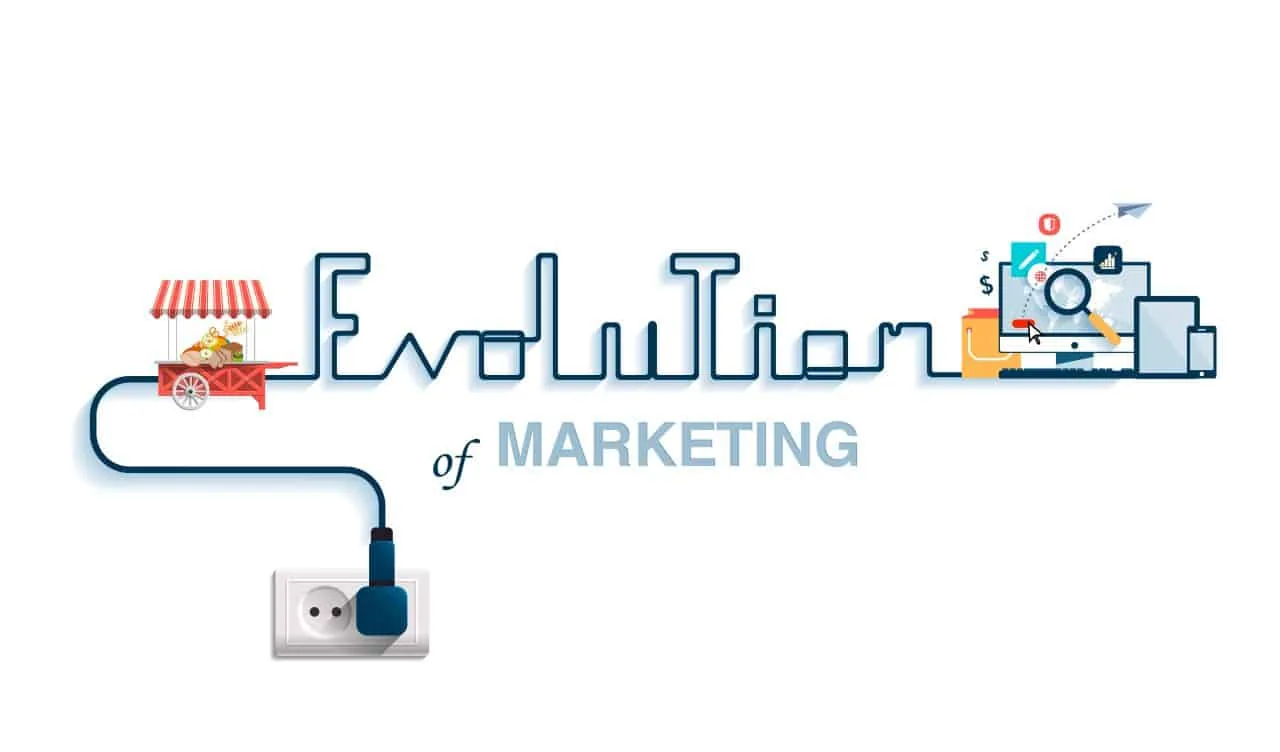
In the 20th century, traditional marketing was without a doubt the best marketing source. For many years, 30-second TV commercials, newspaper ads, and radio jingles dominated brand promotions. The idea was plain and simple: build an engaging message and disseminate it widely. The challenging thing was mostly unidirectional, costly, and challenging to measure.
Then the internet arrived, bringing with it a revolution in marketing. Brands were able to communicate directly with customers, target particular demographics, and monitor engagement in real time thanks to digital platforms. By 2025, this digital evolution has developed into an ecosystem driven by data and artificial intelligence, making digital marketing not only a choice but frequently a requirement.
But tradition is hard to eradicate. For good reason, some industries continue to use tried-and-true techniques. The true question is not which marketing strategy is out of date, but rather which one better suits the goals of modern consumers and businesses.
Reach and Targeting: Mass Appeal vs Precision
Mass exposure is the lifeblood of traditional marketing. Millions of people can still be reached by a full-page newspaper ad or a prime-time TV commercial. There's a catch, though: it spreads the message widely with little control over who sees it. This is advantageous when trying to raise awareness, but it is a drawback when money is limited and accuracy is crucial.
Digital marketing, on the other hand, focuses on micro-targeting. Advertisers can target their audience by demographics such as age, gender, interests, location, behaviour, and even device usage using platforms like Meta (Facebook), Google, LinkedIn, and TikTok. This is furthered by AI-enhanced algorithms in 2025, which dynamically modify targeting in real time to optimise engagement.
Winner: Digital marketing, for its surgical precision in reaching the right audience at the right time.
Cost and ROI: Big Budgets vs Smart Spending

Cost-effectiveness is one of the most alluring benefits of digital marketing in 2025. Digital campaigns can begin with small budgets and grow as needed, but TV and print frequently demand significant upfront expenditures. Pay-per-click (PPC) and programmatic advertising are two examples of tools that guarantee brands only pay for real engagement.
Additionally, digital marketing makes it possible to track performance instantly, something that traditional media cannot do. By keeping an eye on metrics like click-through rates, bounce rates, conversion rates, and customer lifetime value, marketers can make real-time campaign adjustments to improve return on investment.
This granularity is absent from traditional marketing, despite its strong reach. Even though a costly radio ad or billboard may reach thousands of people, you won't know how many actually paid attention or took action.
Winner: Digital marketing, for delivering measurable ROI and budget flexibility.
Consumer Behavior in 2025: Where Are the Eyes and Ears?
Customers are online in 2025. The typical adult uses digital devices for more than six hours every day. People use a variety of devices to consume content on demand, from watching Netflix to browsing Instagram. With social media usage rising across all age groups, even baby boomers are becoming more tech-savvy.
Media consumption has changed from being passive to being interactive. Nowadays, two-way communication is expected by customers. They want to interact with brands by leaving comments, sharing, reacting, and even chatting. Traditional channels, by definition, do not provide this interaction; digital platforms do.
But in some situations, traditional media still has sway. Particularly for sectors like fashion, autos, and real estate, a strategically placed print ad in a high-end magazine or a television commercial during a big sporting event can boost brand prestige and trust.
Winner: Digital marketing, for aligning with modern consumption patterns—but traditional marketing remains relevant for prestige and niche exposure.
Brand Building: Emotional Connection vs Personalized Engagement

Building emotional resonance is the goal of branding, not merely increasing visibility. In the past, traditional media have been very good at this. A memorable billboard or a potent Super Bowl commercial can leave a lasting impression on the public. It's challenging to recreate the immersive, tactile experience that these formats provide digitally.
However, through personalisation, digital marketing in 2025 offers a new form of emotional connection. Brands can create experiences that are customised for each user thanks to AI. Consider Amazon's product recommendations or Spotify's customised playlists. In addition to recognition, these exchanges promote trust and loyalty.
Additionally, unlike traditional media, brands can co-create narratives with their audiences through user-generated content, influencer partnerships, and community engagement on sites like Reddit or Discord.
Winner: It’s a tie. Traditional marketing wins for high-impact storytelling; digital marketing wins for personalized, ongoing engagement.
Speed, Agility, and Innovation
The speed and flexibility are two more significant advantages for digital marketing in 2025. Campaigns can be optimised in real time, changed in minutes, and launched in hours. Content and messaging can be quickly shaped by audience feedback, breaking news, and social trends.
Conventional marketing is slower by nature. It frequently takes weeks to create a magazine or television ad, and once it is out, it cannot be changed. Because of this, it is less adaptable in a world where customer tastes change suddenly.
The adaptability of digital campaigns makes them much more appealing to companies looking to remain relevant in a post-pandemic environment where responsiveness is crucial.
Winner: Digital marketing, for its unmatched agility and real-time responsiveness.
Trust and Credibility: Which Builds It Better?
It's interesting to note that traditional marketing still has a trust advantage in some contexts. A well-written newspaper article or TV commercial can seem legitimate. This is particularly true for older audiences, who may perceive digital advertisements as intrusive or less reliable as a result of the proliferation of clickbait and false information.
But with the growth of verified accounts, influencer marketing, and genuine brand storytelling, digital trust is catching up. In 2025, peer validation—reviews, comments, user content—rather than just well-crafted messaging is frequently what establishes credibility in digital spaces.
Winner: Context-dependent. Traditional media still wins with older or luxury audiences; digital wins with younger, digitally native consumers.
Sustainability and Eco-consciousness
Digital marketing is advantageous in a time when sustainability is a brand differentiator. The environmental impact of physical flyers, billboards, and paper advertisements is higher than that of digital campaigns.
In 2025, a lot of brands are also utilising their digital platforms to measure their carbon footprint, promote green initiatives, and use blockchain to confirm ethical sourcing—all of which are not achievable with traditional advertising.
Winner: Digital marketing, for supporting sustainability and transparency.
The Hybrid Future: Integration Over Competition
Traditional marketing is still relevant even though digital marketing obviously has a lot to offer in terms of reach, agility, targeting, and return on investment. The most prosperous brands in 2025, on the other hand, take a hybrid strategy that combines the advantages of both.
Consider a car company that uses a dramatic TV commercial to tease a new model before using behind-the-scenes Instagram stories to increase engagement. For example, a restaurant that simultaneously launches a geo-targeted mobile offer and runs a newspaper feature.
The true victory is in balancing them to produce a smooth customer journey, not in picking one over the other.
The Verdict in 2025
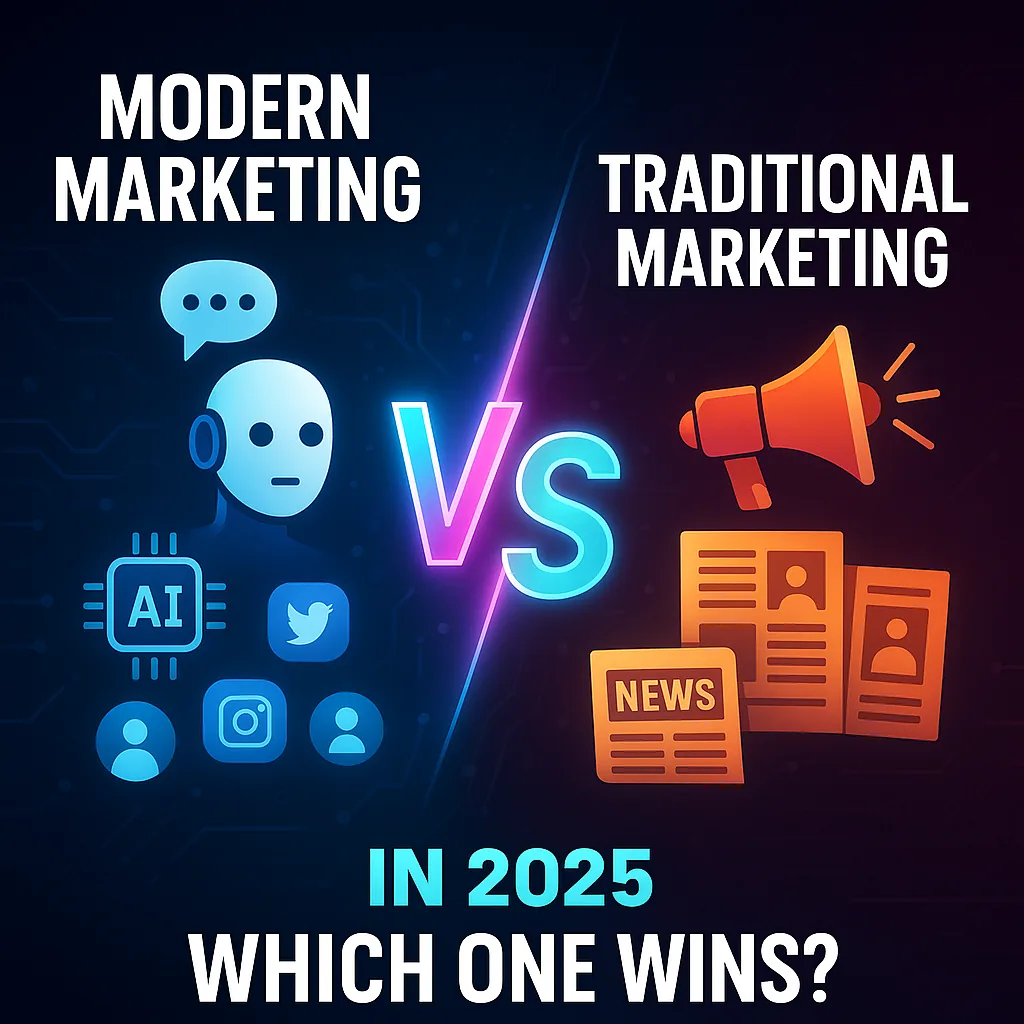
So, which one wins in 2025—digital marketing or traditional marketing?
The answer is simple.
Technology has made it easier for marketers to reach, target, and measure the customer market more efficiently and cost-effectively. So digital marketing is the clear preference for the businesses when they want to focus on performance, personalization, and real-time engagement. Although traditional media still holds value in certain niches. Especially when they want to create high-impact branding and to reach the older audiences and gain their trust. Its tangible and immersive nature can deliver an emotional impact that digital marketing sometimes lacks.
But in a world where consumers' tastes and preferences are constantly evolving, technology and innovations are setting the expectations on greater heights everyday, the only way to succeed is to combine the two worlds strategically.
The customer experience you provide by skilfully combining both marketing strategies will ultimately triumph in 2025, not one over the other.
Client Background: Stellar Shots Videography is a boutique videography studio specializing in capturing memorable moments through cinematic storytelling. With a team of skilled videographers and editors, Stellar Shots has earned a reputation for delivering high-quality videos for weddings, events, and corporate projects. However, despite its exceptional work, the studio faced challenges in effectively showcasing its portfolio and attracting new clients through its website.
Challenge: As visual storytellers, Stellar Shots understood the importance of captivating content in conveying their brand identity and expertise. However, the studio struggled to translate its creativity and passion into compelling written content for its website. The challenge was to revamp the website's content to better reflect Stellar Shots' brand voice, showcase its portfolio, and attract potential clients.
Solution: The content writing team at Creative Captions collaborated closely with Stellar Shots to craft engaging and persuasive content for its portfolio website. The following strategies were implemented:
Discovery and Brand Voice Development:
Conducted a discovery session to understand Stellar Shots' brand values, target audience, and unique selling points.
Developed a brand voice and tone that aligned with Stellar Shots' creative and professional approach to videography.
Portfolio Showcase:
Highlighted Stellar Shots' portfolio of work through captivating descriptions and storytelling, emphasizing the emotions and narratives captured in each video.
Organized the portfolio into distinct categories, such as weddings, events, and corporate projects, to make it easy for visitors to navigate and explore.
Service Descriptions:
Crafted concise and compelling descriptions of Stellar Shots' videography services, emphasizing the studio's expertise, equipment, and commitment to quality.
Clearly outlined the benefits of hiring Stellar Shots for different types of projects, addressing common client concerns and objectives.
Client Testimonials and Success Stories:
Incorporated testimonials and success stories from satisfied clients to provide social proof and build credibility.
Highlighted specific projects and outcomes to demonstrate Stellar Shots' ability to meet and exceed client expectations.
Results:
Stellar Shots Videography saw a 40% increase in website traffic within the first month of launching the revamped content.
Visitor engagement metrics, including time spent on page and bounce rate, improved significantly, indicating a positive user experience and increased interest in Stellar Shots' services.
The studio received an influx of inquiries and leads from potential clients impressed by the storytelling and professionalism showcased in the website's content.
Stellar Shots' brand perception and credibility received a boost, with existing clients and industry peers praising the website's content and messaging.
Testimonial: "Creative Captions did an amazing job capturing the essence of our videography studio through their writing. The content on our website now perfectly reflects our brand identity and the quality of our work. We've received numerous compliments from clients and prospects, and our business has seen tangible growth as a result."
Emily Lawson, Founder of Stellar Shots Videography
This case study demonstrates how Stellar Shots Videography collaborated with Creative Captions to transform its website's content, effectively showcasing its portfolio and attracting new clients in the competitive videography industry.
In this digital-first world, businesses often find it difficult to decide whether to invest in traditional marketing, digital marketing, or a combination of the two. Although this argument has been going on…
In this digital-first world, businesses often find it difficult to decide whether to invest in traditional marketing, digital marketing, or a combination of the two. Although this argument has been going on for more than ten years, the boundaries have never been more clearly defined due to changes in media consumption, consumer behaviour, and technology breakthrough.
The modern era is dominated by data management and well developed information communication systems. It is known as the digital era and in this era digital marketing is much more impactful force than the traditional media. In our digital era marketing force is propelled by data, the media is easily accessible, the ad preferences are personalized by the users. Though traditional marketers believe television, print,radio, and billboards still have a place. However marketers have to be smart to understand the pros and cons of both of these medias rather than seeing them as rivals.
In this blog, we’ll dive deep into the evolving landscape of marketing, evaluate the effectiveness of digital vs. traditional channels in 2025, and ultimately answer the question: Which one truly wins in today’s world of advertising and branding?
The Evolution of Marketing: From Broadcast to Interactive
In the 20th century, traditional marketing was without a doubt the best marketing source. For many years, 30-second TV commercials, newspaper ads, and radio jingles dominated brand promotions. The idea was plain and simple: build an engaging message and disseminate it widely. The challenging thing was mostly unidirectional, costly, and challenging to measure.
Then the internet arrived, bringing with it a revolution in marketing. Brands were able to communicate directly with customers, target particular demographics, and monitor engagement in real time thanks to digital platforms. By 2025, this digital evolution has developed into an ecosystem driven by data and artificial intelligence, making digital marketing not only a choice but frequently a requirement.
But tradition is hard to eradicate. For good reason, some industries continue to use tried-and-true techniques. The true question is not which marketing strategy is out of date, but rather which one better suits the goals of modern consumers and businesses.
Reach and Targeting: Mass Appeal vs Precision
Mass exposure is the lifeblood of traditional marketing. Millions of people can still be reached by a full-page newspaper ad or a prime-time TV commercial. There's a catch, though: it spreads the message widely with little control over who sees it. This is advantageous when trying to raise awareness, but it is a drawback when money is limited and accuracy is crucial.
Digital marketing, on the other hand, focuses on micro-targeting. Advertisers can target their audience by demographics such as age, gender, interests, location, behaviour, and even device usage using platforms like Meta (Facebook), Google, LinkedIn, and TikTok. This is furthered by AI-enhanced algorithms in 2025, which dynamically modify targeting in real time to optimise engagement.
Winner: Digital marketing, for its surgical precision in reaching the right audience at the right time.
Cost and ROI: Big Budgets vs Smart Spending
Cost-effectiveness is one of the most alluring benefits of digital marketing in 2025. Digital campaigns can begin with small budgets and grow as needed, but TV and print frequently demand significant upfront expenditures. Pay-per-click (PPC) and programmatic advertising are two examples of tools that guarantee brands only pay for real engagement.
Additionally, digital marketing makes it possible to track performance instantly, something that traditional media cannot do. By keeping an eye on metrics like click-through rates, bounce rates, conversion rates, and customer lifetime value, marketers can make real-time campaign adjustments to improve return on investment.
This granularity is absent from traditional marketing, despite its strong reach. Even though a costly radio ad or billboard may reach thousands of people, you won't know how many actually paid attention or took action.
Winner: Digital marketing, for delivering measurable ROI and budget flexibility.
Consumer Behavior in 2025: Where Are the Eyes and Ears?
Customers are online in 2025. The typical adult uses digital devices for more than six hours every day. People use a variety of devices to consume content on demand, from watching Netflix to browsing Instagram. With social media usage rising across all age groups, even baby boomers are becoming more tech-savvy.
Media consumption has changed from being passive to being interactive. Nowadays, two-way communication is expected by customers. They want to interact with brands by leaving comments, sharing, reacting, and even chatting. Traditional channels, by definition, do not provide this interaction; digital platforms do.
But in some situations, traditional media still has sway. Particularly for sectors like fashion, autos, and real estate, a strategically placed print ad in a high-end magazine or a television commercial during a big sporting event can boost brand prestige and trust.
Winner: Digital marketing, for aligning with modern consumption patterns—but traditional marketing remains relevant for prestige and niche exposure.
Brand Building: Emotional Connection vs Personalized Engagement
Building emotional resonance is the goal of branding, not merely increasing visibility. In the past, traditional media have been very good at this. A memorable billboard or a potent Super Bowl commercial can leave a lasting impression on the public. It's challenging to recreate the immersive, tactile experience that these formats provide digitally.
However, through personalisation, digital marketing in 2025 offers a new form of emotional connection. Brands can create experiences that are customised for each user thanks to AI. Consider Amazon's product recommendations or Spotify's customised playlists. In addition to recognition, these exchanges promote trust and loyalty.
Additionally, unlike traditional media, brands can co-create narratives with their audiences through user-generated content, influencer partnerships, and community engagement on sites like Reddit or Discord.
Winner: It’s a tie. Traditional marketing wins for high-impact storytelling; digital marketing wins for personalized, ongoing engagement.
Speed, Agility, and Innovation
The speed and flexibility are two more significant advantages for digital marketing in 2025. Campaigns can be optimised in real time, changed in minutes, and launched in hours. Content and messaging can be quickly shaped by audience feedback, breaking news, and social trends.
Conventional marketing is slower by nature. It frequently takes weeks to create a magazine or television ad, and once it is out, it cannot be changed. Because of this, it is less adaptable in a world where customer tastes change suddenly.
The adaptability of digital campaigns makes them much more appealing to companies looking to remain relevant in a post-pandemic environment where responsiveness is crucial.
Winner: Digital marketing, for its unmatched agility and real-time responsiveness.
Trust and Credibility: Which Builds It Better?
It's interesting to note that traditional marketing still has a trust advantage in some contexts. A well-written newspaper article or TV commercial can seem legitimate. This is particularly true for older audiences, who may perceive digital advertisements as intrusive or less reliable as a result of the proliferation of clickbait and false information.
But with the growth of verified accounts, influencer marketing, and genuine brand storytelling, digital trust is catching up. In 2025, peer validation—reviews, comments, user content—rather than just well-crafted messaging is frequently what establishes credibility in digital spaces.
Winner: Context-dependent. Traditional media still wins with older or luxury audiences; digital wins with younger, digitally native consumers.
Sustainability and Eco-consciousness
Digital marketing is advantageous in a time when sustainability is a brand differentiator. The environmental impact of physical flyers, billboards, and paper advertisements is higher than that of digital campaigns.
In 2025, a lot of brands are also utilising their digital platforms to measure their carbon footprint, promote green initiatives, and use blockchain to confirm ethical sourcing—all of which are not achievable with traditional advertising.
Winner: Digital marketing, for supporting sustainability and transparency.
The Hybrid Future: Integration Over Competition
Traditional marketing is still relevant even though digital marketing obviously has a lot to offer in terms of reach, agility, targeting, and return on investment. The most prosperous brands in 2025, on the other hand, take a hybrid strategy that combines the advantages of both.
Consider a car company that uses a dramatic TV commercial to tease a new model before using behind-the-scenes Instagram stories to increase engagement. For example, a restaurant that simultaneously launches a geo-targeted mobile offer and runs a newspaper feature.
The true victory is in balancing them to produce a smooth customer journey, not in picking one over the other.
The Verdict in 2025
So, which one wins in 2025—digital marketing or traditional marketing?
The answer is simple.
Technology has made it easier for marketers to reach, target, and measure the customer market more efficiently and cost-effectively. So digital marketing is the clear preference for the businesses when they want to focus on performance, personalization, and real-time engagement. Although traditional media still holds value in certain niches. Especially when they want to create high-impact branding and to reach the older audiences and gain their trust. Its tangible and immersive nature can deliver an emotional impact that digital marketing sometimes lacks.
But in a world where consumers' tastes and preferences are constantly evolving, technology and innovations are setting the expectations on greater heights everyday, the only way to succeed is to combine the two worlds strategically.
The customer experience you provide by skilfully combining both marketing strategies will ultimately triumph in 2025, not one over the other.
Keep Reading
More From Our Blog
Fresh insights on SEO, ads, content and growth from the Mr. Radiant team
Keep Reading
More From Our Blog
Fresh insights on SEO, ads, content and growth from the Mr. Radiant team
Keep Reading
More From Our Blog
Fresh insights on SEO, ads, content and growth from the Mr. Radiant team