Blog
Why Email Marketing Isn’t Dead—and How to Use It Right
Blog
Why Email Marketing Isn’t Dead—and How to Use It Right
Trends change incredibly quickly in the ever-changing world of digital marketing. Influencer credibility varies, social media algorithms shift suddenly, and newer technologies like chatbots and AI assistants…
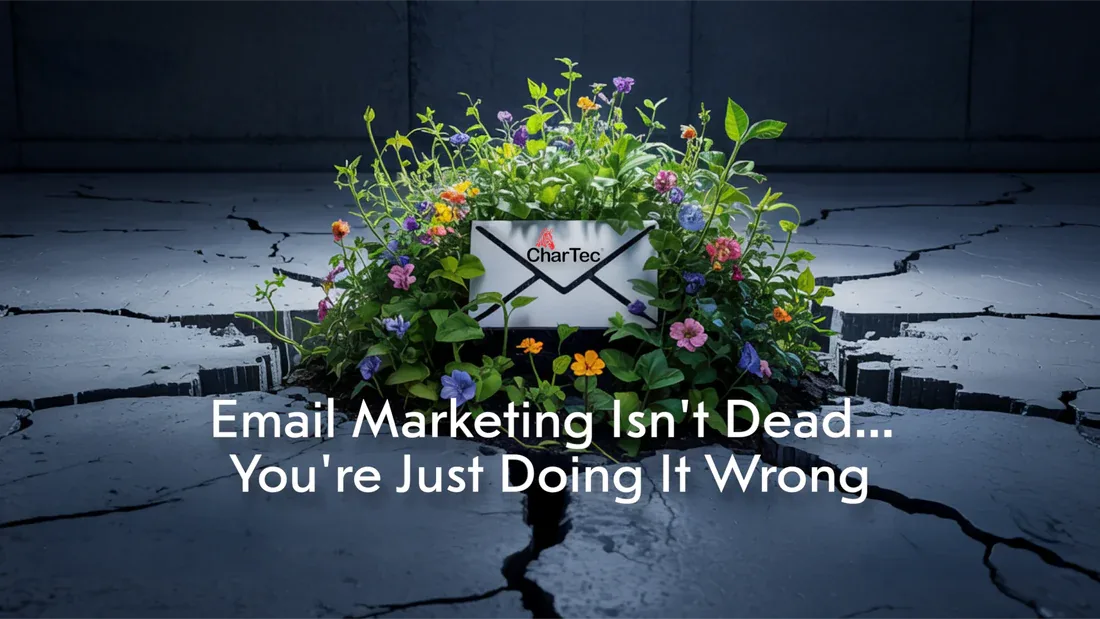
Trends change incredibly quickly in the ever-changing world of digital marketing. Influencer credibility varies, social media algorithms shift suddenly, and newer technologies like chatbots and AI assistants are changing the way brands engage with their target audiences. Email marketing is frequently dismissed as an antiquated holdover from the early internet era in the midst of all these advancements. Even seasoned marketers and many businesses wonder if email campaigns are still worth the time and effort.
However, a completely different picture becomes apparent when we stop to consider the data and actual results. Email marketing is thriving, not just alive. In actuality, it is still among the most economical and successful methods for attracting clients and fostering enduring connections. Behind the scenes, it continues to dominate quietly thanks to advancements in technology, changing user behaviour, and the enduring allure of tailored communication. This blog examines the evolution of email marketing and the reasons it remains so powerful in 2025.
The Persistent Myth That Email Is Dead
We must investigate the causes of email marketing's purported decline in order to comprehend why it is so frequently misinterpreted. Overexposure is largely to blame for the scepticism. It's simple to assume that people ignore marketing emails completely because their inboxes are constantly overloaded with spam, irrelevant newsletters, and promotional offers. This contributes to the general perception that email is becoming obsolete, particularly when contrasted with visually stimulating platforms such as Instagram or TikTok.
However, reality is not reflected in this perception. Email marketing regularly yields a return on investment (ROI) that surpasses nearly every other digital channel, averaging $42 earned for every $1 spent, according to industry data from 2025. It's also important to note that the number of email users worldwide is expected to reach over 4.8 billion by the end of this year. These are not insignificant numbers; they demonstrate how ingrained email is in people's interactions and communication with brands.
Above all, email is a type of owned media. Your email list is wholly yours, unlike social media sites where your content is governed by third parties and shifting algorithms. In an otherwise unstable digital ecosystem, this offers marketers a unique degree of stability and control.
The Rebirth of Email in the Modern Marketing Stack

In recent years, email has experienced a resurgence as it subtly changed to satisfy the demands of a more affluent, privacy-conscious, and technologically literate customer base. Sending generic newsletters to a list of strangers is no longer the mainstay of email marketing today. It involves developing timely, interactive, and customised experiences that cater to the individual requirements and habits of every subscriber.
The way emails are now created and distributed is one significant change. Email service providers like Klaviyo, HubSpot, and Mailchimp, as well as sophisticated CRM platforms, have made it feasible to segment audiences with remarkable accuracy. Marketers can now target users based on detailed behavioural data, such as what products they have browsed, what content they have read, what purchases they have made, and even how often they have interacted with previous emails, instead of sending out the same message to everyone.
Marketers are able to communicate much more meaningfully with this level of granularity. An e-commerce site might, for example, gently remind a user who left their cart unattended the following day, and if they don't convert within 48 hours, offer them a time-limited discount. Care instructions, usage advice, or recommendations for related products could be sent to a customer who recently purchased a product. Over time, trust is developed between the brand and the customer as a result of each of these interactions.
Why Email Builds Better Relationships Than Other Channels
Email's capacity to support enduring client relationships is one of its enduring advantages. While social media is excellent at generating immediate impressions and viral engagement, email is where longer-term, more in-depth discussions take place. Email provides a calmer, more intimate touch in a world where noise is overwhelming customers.
One of the most secluded and well-maintained digital environments is still the inbox. You are essentially being invited into a more private communication circle when someone gives you their email address. If used properly, email's permission-based structure makes it a very potent tool. Brands can continue to have an impact on people's lives for a long time if they uphold this trust by providing insightful, timely content.
Social media platforms, on the other hand, are transient. Within minutes, posts may vanish from view. Whether or not your message reaches your followers at all may depend on algorithms. Furthermore, on these platforms, you don't actually control your audience. Your followers would disappear along with Facebook and Instagram if they were to disappear tomorrow. Email establishes a stronger connection that is not dependent on external platforms.
The Versatility of Email Across the Marketing Funnel
The adaptability of email marketing throughout the whole customer journey is another benefit that is frequently disregarded. Email can be used at every stage of the funnel, whether your goal is to draw in new leads, turn prospects into customers, keep hold of current clients, or reconnect with lapsed ones.
For example, companies can use valuable lead magnets, like webinars, discount codes, or free resources, at the top of the funnel to get website visitors' email addresses. Automated welcome sequences can inform leads about the brand, establish trust, and direct them towards a purchase once they are in the system. Following the conversion, follow-up emails may include product instructions, order updates, or feedback requests. Personalised recommendations and loyalty rewards encourage repeat business.
Email is a unique all-purpose tool in a marketer's toolbox because of its full-funnel functionality. More smoothly than practically any other channel, it connects acquisition and retention.
Common Pitfalls and Misconceptions
Email marketing is not impervious to errors, despite its advantages. Considering their email strategy as an afterthought is one of the most common mistakes that companies make. Email campaigns can, in fact, come across as spammy, irrelevant, or invasive when done poorly. This typically occurs when marketers over-rely on generic sales messaging or neglect to segment their audience.
Ignoring mobile optimisation is another frequent problem. Over 60% of emails are now viewed on smartphones. Engagement is unlikely to result from a badly formatted email that is difficult to read or navigate on a small screen. From succinct subject lines to tap-friendly call-to-action buttons, brands need to make sure that every email is created with mobile-first principles in mind.
Additionally, sending too many emails can backfire. Automation facilitates communication scaling, but it also raises the possibility of audience overload. Maintaining long-term subscriber engagement requires finding the ideal balance between frequency and value.
Doing Email Marketing Right in 2025
Brands must change their focus from blasting campaigns to building conversations if they want to be successful with email marketing in the modern environment. It starts with properly gathering emails by providing genuine value in return for a person's contact details, rather than using bought lists or intrusive pop ups. This value could be in the form of exclusive access, instructional materials, or just a satisfying customer experience.
Personalisation then becomes the cornerstone of efficacy. In addition to the recipient's name, emails should be customised based on their behaviour, preferences, and stage of the purchasing process. Integrating email with your CRM, e-commerce platform, and analytics tools is necessary to achieve this degree of personalisation and create a comprehensive picture of every subscriber.
Another factor is creative design. Emails that are visually appealing and complement your brand's style help to reinforce your professionalism and identity, but the message is always paramount. Real-time countdown timers, carousels, and embedded video are examples of interactive elements that can boost engagement and make your messages more vivid.
However, learning and testing are arguably the most crucial elements. Email marketing ought to be an ongoing experimentation process. While keeping a careful eye on performance indicators like open rates, click-through rates, and conversion rates, marketers must be open to experimenting with different subject lines, layouts, and content styles. This data-driven strategy eventually produces better results and more solid relationships.
Conclusion: Email Is Far From Dead
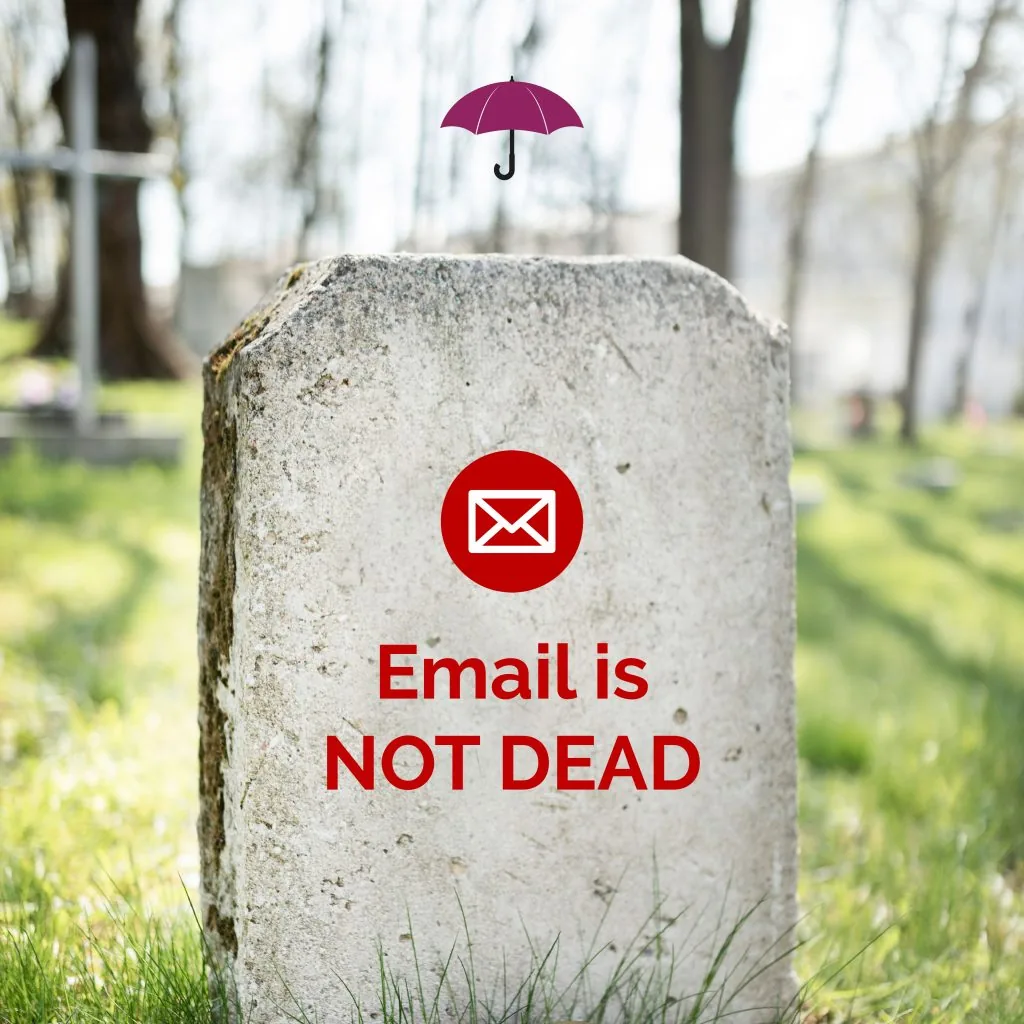
The myth that email marketing is no longer relevant is not only false, but it poses a risk to companies that hold this belief. Email is still one of the most dependable and successful ways to establish deep, lucrative relationships with clients as 2025 draws to a close.
Sending the most emails is no longer the goal. It all comes down to sending the appropriate email at the appropriate time to the appropriate recipient. Effective use of email can make it the beating heart of your digital marketing plan, increasing engagement, fostering customer loyalty, and producing tangible business outcomes.
Email marketing is here to stay. Its best days might actually still be in the future.
Client Background: Stellar Shots Videography is a boutique videography studio specializing in capturing memorable moments through cinematic storytelling. With a team of skilled videographers and editors, Stellar Shots has earned a reputation for delivering high-quality videos for weddings, events, and corporate projects. However, despite its exceptional work, the studio faced challenges in effectively showcasing its portfolio and attracting new clients through its website.
Challenge: As visual storytellers, Stellar Shots understood the importance of captivating content in conveying their brand identity and expertise. However, the studio struggled to translate its creativity and passion into compelling written content for its website. The challenge was to revamp the website's content to better reflect Stellar Shots' brand voice, showcase its portfolio, and attract potential clients.
Solution: The content writing team at Creative Captions collaborated closely with Stellar Shots to craft engaging and persuasive content for its portfolio website. The following strategies were implemented:
Discovery and Brand Voice Development:
Conducted a discovery session to understand Stellar Shots' brand values, target audience, and unique selling points.
Developed a brand voice and tone that aligned with Stellar Shots' creative and professional approach to videography.
Portfolio Showcase:
Highlighted Stellar Shots' portfolio of work through captivating descriptions and storytelling, emphasizing the emotions and narratives captured in each video.
Organized the portfolio into distinct categories, such as weddings, events, and corporate projects, to make it easy for visitors to navigate and explore.
Service Descriptions:
Crafted concise and compelling descriptions of Stellar Shots' videography services, emphasizing the studio's expertise, equipment, and commitment to quality.
Clearly outlined the benefits of hiring Stellar Shots for different types of projects, addressing common client concerns and objectives.
Client Testimonials and Success Stories:
Incorporated testimonials and success stories from satisfied clients to provide social proof and build credibility.
Highlighted specific projects and outcomes to demonstrate Stellar Shots' ability to meet and exceed client expectations.
Results:
Stellar Shots Videography saw a 40% increase in website traffic within the first month of launching the revamped content.
Visitor engagement metrics, including time spent on page and bounce rate, improved significantly, indicating a positive user experience and increased interest in Stellar Shots' services.
The studio received an influx of inquiries and leads from potential clients impressed by the storytelling and professionalism showcased in the website's content.
Stellar Shots' brand perception and credibility received a boost, with existing clients and industry peers praising the website's content and messaging.
Testimonial: "Creative Captions did an amazing job capturing the essence of our videography studio through their writing. The content on our website now perfectly reflects our brand identity and the quality of our work. We've received numerous compliments from clients and prospects, and our business has seen tangible growth as a result."
Emily Lawson, Founder of Stellar Shots Videography
This case study demonstrates how Stellar Shots Videography collaborated with Creative Captions to transform its website's content, effectively showcasing its portfolio and attracting new clients in the competitive videography industry.
Trends change incredibly quickly in the ever-changing world of digital marketing. Influencer credibility varies, social media algorithms shift suddenly, and newer technologies like chatbots and AI assistants…
Trends change incredibly quickly in the ever-changing world of digital marketing. Influencer credibility varies, social media algorithms shift suddenly, and newer technologies like chatbots and AI assistants are changing the way brands engage with their target audiences. Email marketing is frequently dismissed as an antiquated holdover from the early internet era in the midst of all these advancements. Even seasoned marketers and many businesses wonder if email campaigns are still worth the time and effort.
However, a completely different picture becomes apparent when we stop to consider the data and actual results. Email marketing is thriving, not just alive. In actuality, it is still among the most economical and successful methods for attracting clients and fostering enduring connections. Behind the scenes, it continues to dominate quietly thanks to advancements in technology, changing user behaviour, and the enduring allure of tailored communication. This blog examines the evolution of email marketing and the reasons it remains so powerful in 2025.
The Persistent Myth That Email Is Dead
We must investigate the causes of email marketing's purported decline in order to comprehend why it is so frequently misinterpreted. Overexposure is largely to blame for the scepticism. It's simple to assume that people ignore marketing emails completely because their inboxes are constantly overloaded with spam, irrelevant newsletters, and promotional offers. This contributes to the general perception that email is becoming obsolete, particularly when contrasted with visually stimulating platforms such as Instagram or TikTok.
However, reality is not reflected in this perception. Email marketing regularly yields a return on investment (ROI) that surpasses nearly every other digital channel, averaging $42 earned for every $1 spent, according to industry data from 2025. It's also important to note that the number of email users worldwide is expected to reach over 4.8 billion by the end of this year. These are not insignificant numbers; they demonstrate how ingrained email is in people's interactions and communication with brands.
Above all, email is a type of owned media. Your email list is wholly yours, unlike social media sites where your content is governed by third parties and shifting algorithms. In an otherwise unstable digital ecosystem, this offers marketers a unique degree of stability and control.
The Rebirth of Email in the Modern Marketing Stack
In recent years, email has experienced a resurgence as it subtly changed to satisfy the demands of a more affluent, privacy-conscious, and technologically literate customer base. Sending generic newsletters to a list of strangers is no longer the mainstay of email marketing today. It involves developing timely, interactive, and customised experiences that cater to the individual requirements and habits of every subscriber.
The way emails are now created and distributed is one significant change. Email service providers like Klaviyo, HubSpot, and Mailchimp, as well as sophisticated CRM platforms, have made it feasible to segment audiences with remarkable accuracy. Marketers can now target users based on detailed behavioural data, such as what products they have browsed, what content they have read, what purchases they have made, and even how often they have interacted with previous emails, instead of sending out the same message to everyone.
Marketers are able to communicate much more meaningfully with this level of granularity. An e-commerce site might, for example, gently remind a user who left their cart unattended the following day, and if they don't convert within 48 hours, offer them a time-limited discount. Care instructions, usage advice, or recommendations for related products could be sent to a customer who recently purchased a product. Over time, trust is developed between the brand and the customer as a result of each of these interactions.
Why Email Builds Better Relationships Than Other Channels
Email's capacity to support enduring client relationships is one of its enduring advantages. While social media is excellent at generating immediate impressions and viral engagement, email is where longer-term, more in-depth discussions take place. Email provides a calmer, more intimate touch in a world where noise is overwhelming customers.
One of the most secluded and well-maintained digital environments is still the inbox. You are essentially being invited into a more private communication circle when someone gives you their email address. If used properly, email's permission-based structure makes it a very potent tool. Brands can continue to have an impact on people's lives for a long time if they uphold this trust by providing insightful, timely content.
Social media platforms, on the other hand, are transient. Within minutes, posts may vanish from view. Whether or not your message reaches your followers at all may depend on algorithms. Furthermore, on these platforms, you don't actually control your audience. Your followers would disappear along with Facebook and Instagram if they were to disappear tomorrow. Email establishes a stronger connection that is not dependent on external platforms.
The Versatility of Email Across the Marketing Funnel
The adaptability of email marketing throughout the whole customer journey is another benefit that is frequently disregarded. Email can be used at every stage of the funnel, whether your goal is to draw in new leads, turn prospects into customers, keep hold of current clients, or reconnect with lapsed ones.
For example, companies can use valuable lead magnets, like webinars, discount codes, or free resources, at the top of the funnel to get website visitors' email addresses. Automated welcome sequences can inform leads about the brand, establish trust, and direct them towards a purchase once they are in the system. Following the conversion, follow-up emails may include product instructions, order updates, or feedback requests. Personalised recommendations and loyalty rewards encourage repeat business.
Email is a unique all-purpose tool in a marketer's toolbox because of its full-funnel functionality. More smoothly than practically any other channel, it connects acquisition and retention.
Common Pitfalls and Misconceptions
Email marketing is not impervious to errors, despite its advantages. Considering their email strategy as an afterthought is one of the most common mistakes that companies make. Email campaigns can, in fact, come across as spammy, irrelevant, or invasive when done poorly. This typically occurs when marketers over-rely on generic sales messaging or neglect to segment their audience.
Ignoring mobile optimisation is another frequent problem. Over 60% of emails are now viewed on smartphones. Engagement is unlikely to result from a badly formatted email that is difficult to read or navigate on a small screen. From succinct subject lines to tap-friendly call-to-action buttons, brands need to make sure that every email is created with mobile-first principles in mind.
Additionally, sending too many emails can backfire. Automation facilitates communication scaling, but it also raises the possibility of audience overload. Maintaining long-term subscriber engagement requires finding the ideal balance between frequency and value.
Doing Email Marketing Right in 2025
Brands must change their focus from blasting campaigns to building conversations if they want to be successful with email marketing in the modern environment. It starts with properly gathering emails by providing genuine value in return for a person's contact details, rather than using bought lists or intrusive pop ups. This value could be in the form of exclusive access, instructional materials, or just a satisfying customer experience.
Personalisation then becomes the cornerstone of efficacy. In addition to the recipient's name, emails should be customised based on their behaviour, preferences, and stage of the purchasing process. Integrating email with your CRM, e-commerce platform, and analytics tools is necessary to achieve this degree of personalisation and create a comprehensive picture of every subscriber.
Another factor is creative design. Emails that are visually appealing and complement your brand's style help to reinforce your professionalism and identity, but the message is always paramount. Real-time countdown timers, carousels, and embedded video are examples of interactive elements that can boost engagement and make your messages more vivid.
However, learning and testing are arguably the most crucial elements. Email marketing ought to be an ongoing experimentation process. While keeping a careful eye on performance indicators like open rates, click-through rates, and conversion rates, marketers must be open to experimenting with different subject lines, layouts, and content styles. This data-driven strategy eventually produces better results and more solid relationships.
Conclusion: Email Is Far From Dead
The myth that email marketing is no longer relevant is not only false, but it poses a risk to companies that hold this belief. Email is still one of the most dependable and successful ways to establish deep, lucrative relationships with clients as 2025 draws to a close.
Sending the most emails is no longer the goal. It all comes down to sending the appropriate email at the appropriate time to the appropriate recipient. Effective use of email can make it the beating heart of your digital marketing plan, increasing engagement, fostering customer loyalty, and producing tangible business outcomes.
Email marketing is here to stay. Its best days might actually still be in the future.
Keep Reading
More From Our Blog
Fresh insights on SEO, ads, content and growth from the Mr. Radiant team
Keep Reading
More From Our Blog
Fresh insights on SEO, ads, content and growth from the Mr. Radiant team
Keep Reading
More From Our Blog
Fresh insights on SEO, ads, content and growth from the Mr. Radiant team